Your AI has a model of the world. It's missing a model of your business.
How your company actually works was never public. The Enterprise Model captures it, and puts it to work inside every agent.

Learned from the world
Brilliant at what's common. Left alone, it gives your agents the world's average.
Built from what only you have
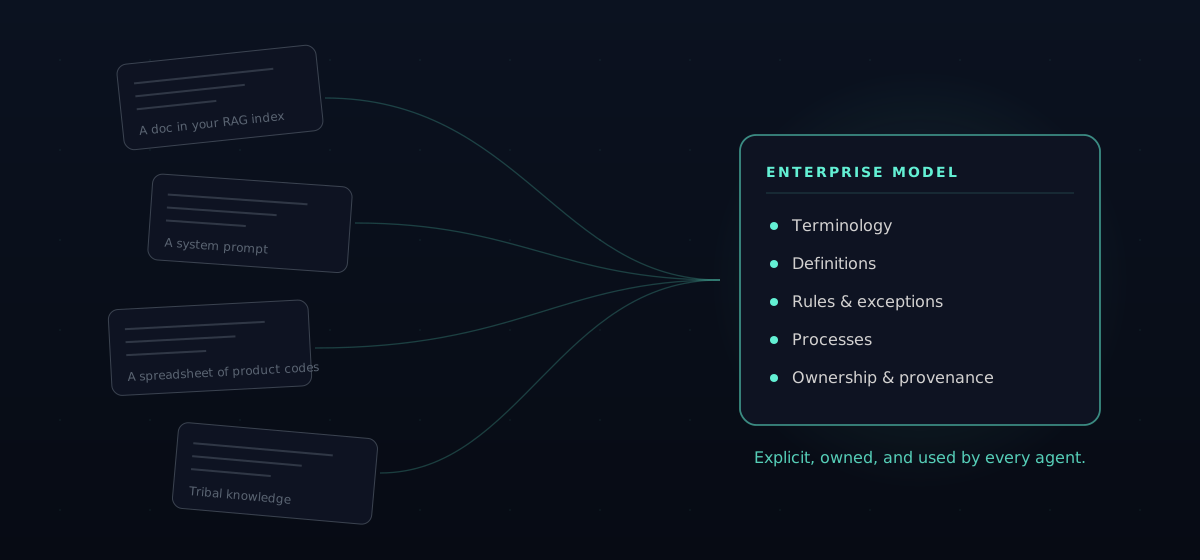
Your definitions, exceptions and escalation paths: never on the open web, and yours alone. Hapax is the engine that turns them into a model.
Today that knowledge is scattered: in the docs in your RAG index, a system prompt, a spreadsheet mapping product codes because the AI kept getting them wrong. Implicit, unowned, and shaping every answer. Hapax turns it into a model you own.
What it captures
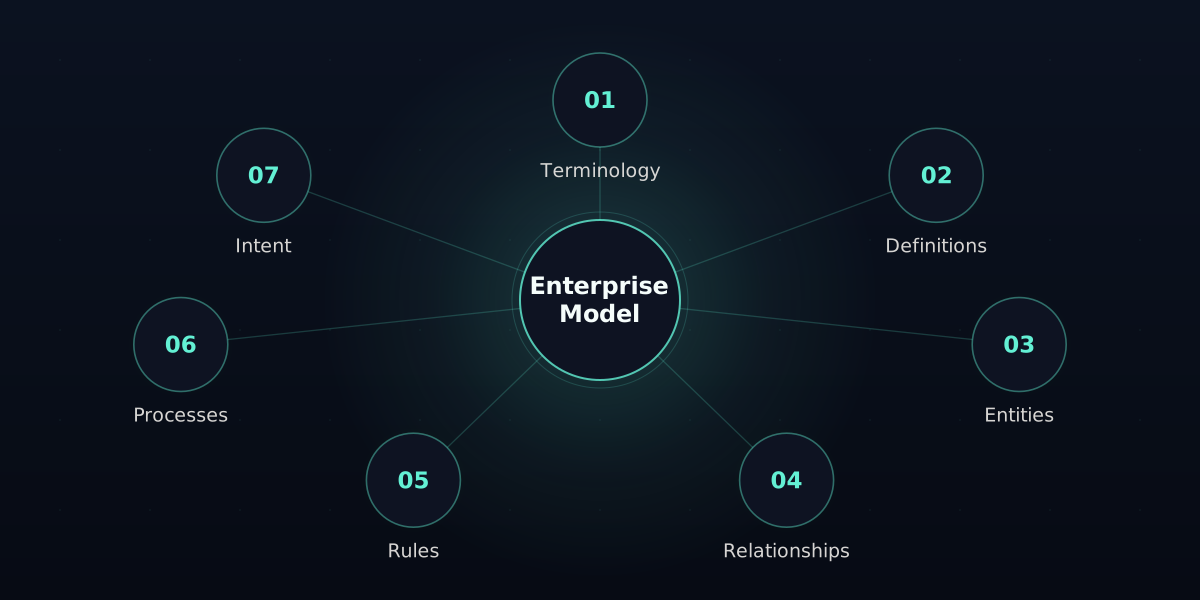
Seven kinds of thing, describing how your business actually works.
What you get for it
Generic AI is generically smart. The Enterprise Model is what makes it enterprise-smart, each capability the end of a failure you already know.
Answers anchored to your facts, not the world’s average.
The same question gets the same answer, whoever asks.
It says so instead of inventing an answer.
Every output traces back to a source you can check.
A named owner and a standard to judge against.
It answers the real decision, not just the literal question.
Trusted to act, and to stop at the exception.
Why it's fast with Hapax
Built from what you already have
Hapax pulls rules out of your existing documents and learns real processes by observing the work, not by interviewing people about it.
In use the moment it changes
The model lives with the agents and workflows that use it. A definition settled this morning is in effect this afternoon, with no integration project in between.
How much of it Hapax carries
Building an enterprise model takes ten conditions, kept true as the business changes. Hapax covers a large part of that territory.

Turn generic intelligence into your outcomes.
Hapax has already built the enterprise model. Your team builds nothing. You integrate it into your organization, and from day one it captures how your business actually works. The Enterprise Model Field Guide is the full picture.